
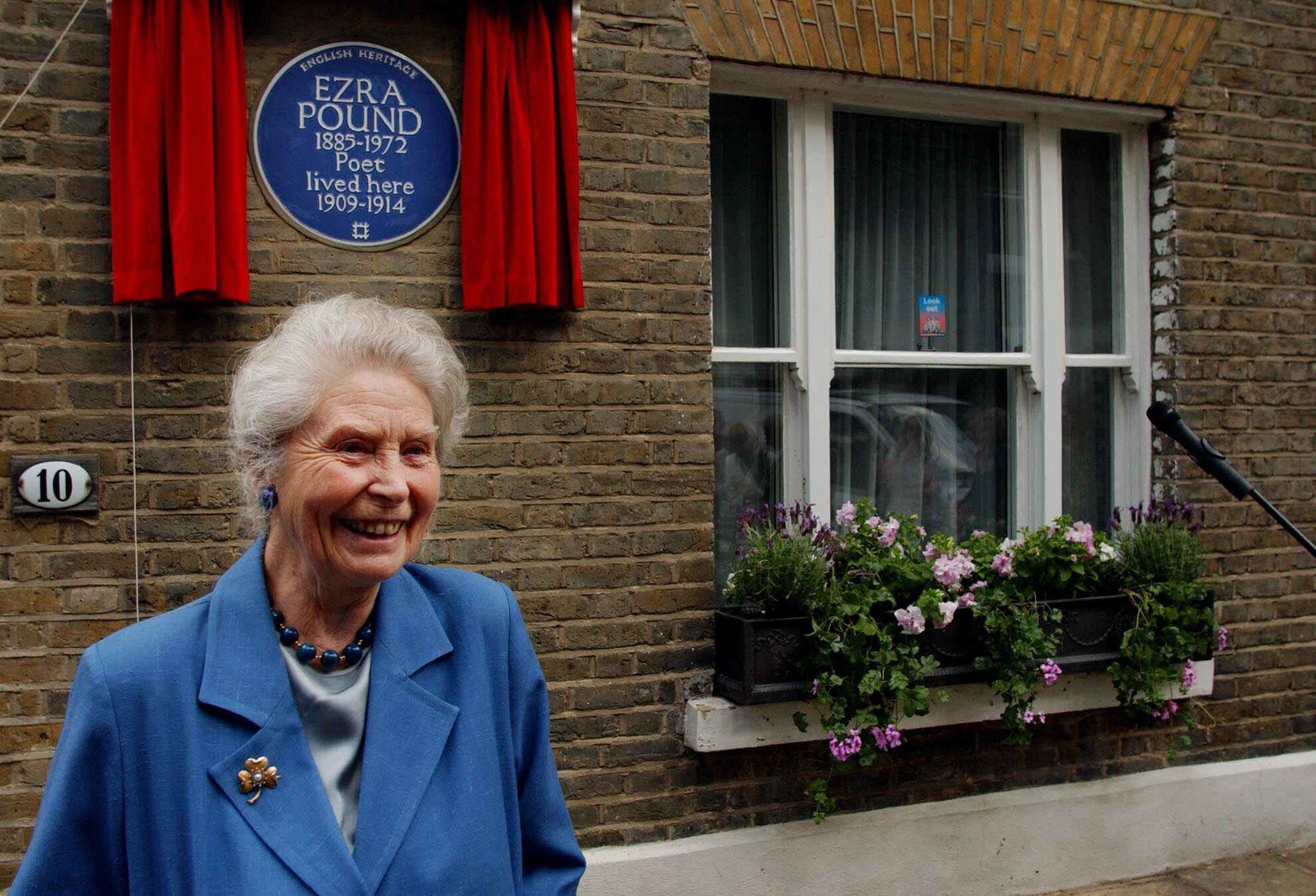
Mary de Rachewiltz, daughter of the poet Ezra Pound and the violinist Olga Rudge, died in July 2026, aged 101. After her father’s death in 1972 and her mother’s in 1996, she was a staunch, sometimes lonely, defender and promoter of the literary reputation of Ezra Pound.
Her long life had its origins in the Paris of the 1920s. It was in Autumn 1922 that the poet met the American-born violinist Olga Rudge at Natalie Barney’s salon at 20, rue Jacob. Olga was ten years younger than the 37-year old poet, well-connected among the creative community, a musician at a time when Pound had developed (largely unrealistic) musical ambitions, financially independent, and single. An extra personal connection was that Olga’s Aunt Louise and Uncle Harold Baynes (a naturalist) were neighbours of Pound’s parents in Wyncote, Pennsylvania. A complication was that the poet was married.
The years 1923 to 1925 saw Ezra, his wife Dorothy and Olga involved in a trans-European dance with their paths crossing in a variety of combinations. Dorothy and the poet’s peregrinations across Europe were broken by interludes when he met with or travelled with Olga. In August 1923, the lovers took advantage of Dorothy’s absence—in London for her father’s final days and funeral—for a walking tour of the Dordogne—where the poet had twice walked with Dorothy and returned with Olga in 1924.
In February 1924 Olga visited Rapallo while Ezra and Dorothy were there. In the same year after a performance in London, Olga was taken to lunch by the poet’s mother-in-law Olivia Shakespear—‘I took Olga to lunch with me at the Club. She is a charming girl, and so pretty,’ mother reported to daughter. Her attitude might have been different if she had known of her son-in-law’s relationship with Olga or that, after Ezra and Olga met in November 1924, Olga noted in her diary, ‘piantato un figlio’. Olga wrote later in her characteristic third-person style: ‘OR, as early as 1923, said she would like a child by EP. I would not have made the suggestion except that after ten years of marriage, his wife did not want a child, had never wanted a child, and at her age it did not seem likely that she would have one.’
When Ezra and Dorothy settled in Rapallo, Italy in early 1925, the pregnant Olga soon followed. While Ezra and Dorothy’s apartment was on the seafront, Olga rented the upper half of a house high up on the hill south of the town in San Ambroglio. Olga’s home was simple and bare. It did not have any electricity when she first moved in. Stella Bowen (the former partner of Ford Madox Ford) visited and wrote in Drawn From Life that Olga had ‘almost no material possessions, but her well-proportioned rooms furnished with big rectangles of sunshine had a monastic air’.
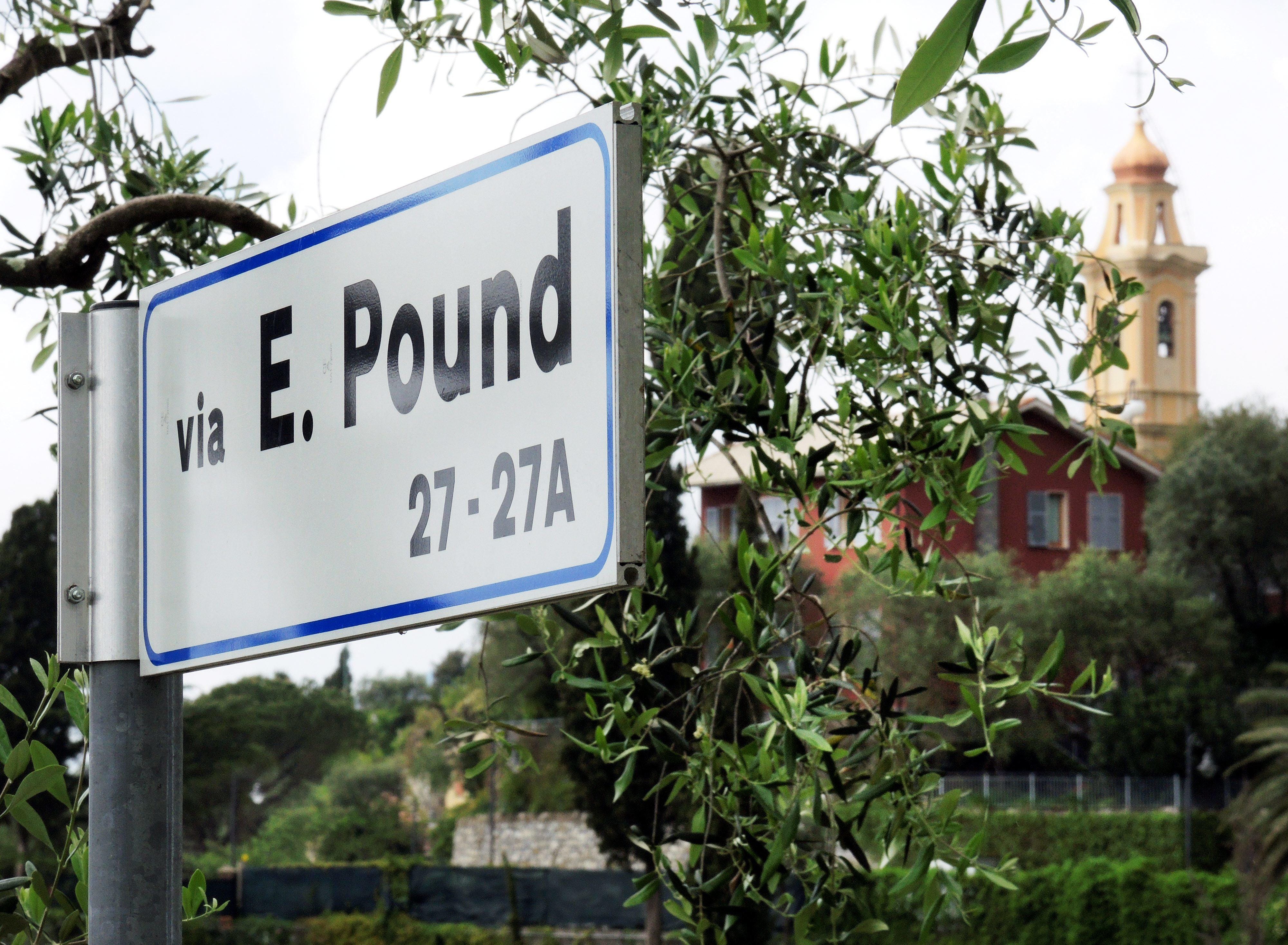
The steps up were regularly climbed in the afternoon by the poet. In memory there is a via Ezra Pound near the top of the steep hill. Notwithstanding the monastic air, Ezra and Olga’s sex life was neatly recorded by Olga in her diary. If it was good enough for George Washington it was good enough for her, she reasoned—‘According to E., G Washington in his diary used to put the names of one or the other of his female slaves—without further comment. Tho’ E. objects….my “X” will…appear again for my own private satisfaction.’
For the birth of their child on 9 July 1925, Olga went to Austria to minimise any social embarrassment. Ezra and Olga’s daughter Mary was born at the Sanitoria della citta Bressanone on a Thursday and on the Sunday the new father received the news via telegram. Olga was in no hurry to be re-united—‘I did not want E. to see me until well after….women make themselves disgusting on these occasions.’ Practical and decisive, Olga left her new born child with a wet nurse from a farming family in Austria and headed back to Rapallo. From the start Mary’s upbringing was outsourced to Jakob and Hanne Marcher. And there she remained: in Gais in the Tirol, learning to speak rough-hewn German, far removed from the bohemian friends and genteel salons of her parents.
There is nothing in the poet’s correspondence to suggest momentous personal events, but a letter from Ernest Hemingway refers to the birth of Mary—‘Fayot’s gave me the news. It’s great and I hope everything’s all right.’ Fayot’s probably refers to one of Hemingway’s preferred Montparnasse restaurants La Closiere des Lilas. Hemingway goes on to celebrate Ezra’s perceived decency in standing by Olga: ‘Glad it was all right. I mean acceptable. Ain’t you got a noble character too tho. I was surprised myself.’
While Pound got used to the idea of being a father—it remained theoretical as he hadn’t yet met the baby—in December 1925, Dorothy went to Egypt on holiday. With Dorothy absent, presumably also getting used to the idea of her husband as a father, the new parents, Ezra and Olga, spent Christmas together in Rapallo—without their new child.
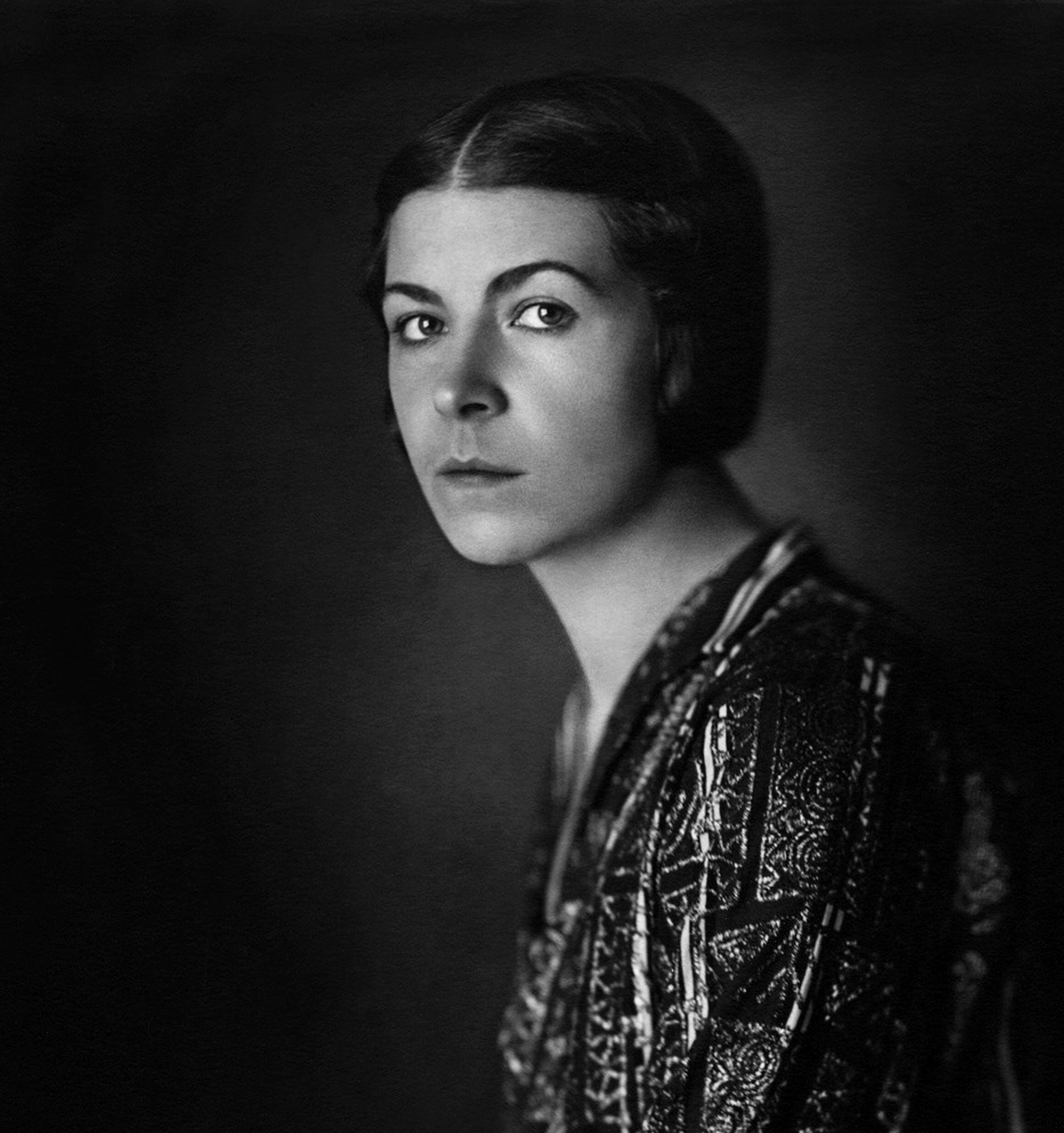
‘Awfully surrounded by human complications,’ Ezra writes to the British musician Agnes Bedford in June 1926.[1] The complications of parenthood were undoubtedly human and for the self-obsessed poet inconvenient and difficult to manage. To this was added another complication: Dorothy returned from Egypt pregnant. The father, met on her Egyptian holiday, has never been publicly identified.
Dorothy’s son Omar was born in Paris on 10 September 1926. Dorothy was taken to the hospital by Hemingway. While Ezra was officially identified as Omar’s father, in practice he was nowhere to be seen—at the birth or during Omar’s formative years. Indeed, Ezra met him for the first time when he was 12. Omar’s upbringing was again outsourced but this time within Dorothy’s family. He was brought up by his grandmother Olivia (then in her sixties) in England and visited annually, in late Summer and early Autumn, by his mother. When Dorothy headed to England, Ezra left for Venice to stay with Olga who had a small apartment there.
A way of living emerged. Dorothy and Ezra ate their meals at the Albergo Rapallo below their apartment—also the home to a large Gaudier-Brezska bust of the poet. The poet’s days often involved games of tennis or swimming. The latter was conveniently on the route to Olga’s house.
While all was child-free social neatness in Rapallo, the arrangement was not easily explained to others. At one point, in a brilliantly pithy letter, the poet sends his parents a picture of their grand-daughter Mary—‘Enclose another member of the family. Also canto 26.’[2] Homer and Isabel Pound not only have to figure out a constructive reaction to Canto 26, but have to contemplate what or who ‘another member of the family’ can possibly mean.
While Homer and Isabel probably would have heard of the violinist, at this point they had not been told that she is their son’s lover and has a child by him. Ezra simply includes a photo of a baby girl in one of his letters. He does so again in June 1928 and Homer Pound replies with understandable confusion: ‘You do not tell us who the photograph is, the child shown—is it the same one as you sent a year or so ago?’ and carries on, ‘Mama wonders why she is the recipient of strange children without name or habitation or connection.’[3] No clarification is forthcoming in subsequent letters from the poet. Ezra eventually explains the situation to his father when his parents are in Rapallo in 1929—still not sharing the name of the child’s mother. His mother is not, they decide, ready to understand such a ‘European’ arrangement. Eventually, in September 1933 Homer met Mary in Bolzano. Ten years later, in 1943 Ezra made the long and dangerous journey in wartime from Rome to her Austrian home in Gais to tell Mary about the existance of Dorothy and Omar. Dorothy was similarly, more understandably, reticent in mentioning Mary. She eventually tells Omar about Mary in 1945.
Ezra and Olga’s relationship had obvious strains as Ezra was unwilling to leave Dorothy and was equally unwilling to abandon Olga. The situation was emotionally and practically complicated. A few weeks after Omar’s birth Ezra was taken into hospital with a stress-related illness—‘I did not appreciate then…the physical stress he was under,’ Olga later said.
Olga divided her time between Venice and Rapallo with regular trips to Paris. She forged her own life while in a perpetual state of waiting for her lover. The biography of Ezra and Olga’s relationship begins with the strikingly unromantic line: ‘Olga Rudge had nothing to gain by an alliance with Ezra Pound.’ This must have become clearer as time went on in the late 1920s and beyond. Olga’s career as a violinist slowly declined. She played for (and talked with) Mussolini in February 1927, and in the early 1930s Ezra organised and enthusiastically marketed concerts in Rapallo featuring Olga.
Not surprisingly, the time Ezra spent in organising concerts featuring his lover just a few hundred metres from his marital home did not meet with approval from Dorothy. ‘Mrs. Pound told me privately that this kind of thing had always taken up too much of his time and energy; that he used, for example, to sell tickets at the door himself and make all the business arrangements for the concerts so that the musicians would get every penny of the receipts,’ the poet and publisher Louis Dudek reported after meeting Dorothy.[4] In 1933 Olga started work in Siena with Academia Musicale Chigiana which proved long-term.
The art critic Adrian Stokes, a friend of Olga’s, suggests patience as the best strategy: ‘You are necessary to Ezra, of that I am certain. You’ve only got to hold on.’ She holds on but, understandably, bridles at being so conveniently sidelined. Her irritation is occasionally expressed—‘I can’t see…where people get to if they start thinking their moods and emotions are the only thing in life’; ‘He has always barged into her life just when He wanted, and if she wasn’t ready and waiting, He damn well made her feel she “ought” to have been.’
Ezra’s insensitivity is often cited. Little wonder. One researcher suggests that he wanted to name his daughter, Iseult, but the idea was over-ruled by Olga. Iseult was the name of one of his former lovers, the daughter of Yeats’ muse Maud Gonne. He reduces Olga to tears when he suggests that Dorothy could perhaps use her apartment when Olga is away—‘He very nice when he saw it upset me—curious blank spots!’ At the same time, when Dorothy was absent, Olga was happy to use her apartment. In 1934 she is miffed: ‘This year am not allowed in the flat, dine at the Albergo Rapallo and then up here, at 3 or 4:30.’
When Dorothy’s mother, Olivia Shakespear, died in 1938, Dorothy was recuperating from an operation and Ezra was sent to London to take charge and sort out the distribution of Olivia’s possessions. Olga was outraged: ‘The best years of her life have been spent in solitary confinement out of consideration for His family….it is the limit to expect her to be sacrificed now to their furniture.’ But sacrificed she was, repeatedly.
In daily practice Ezra compartmentalised relationships. In Rapallo he usually managed things so that people remained neatly separated. Visitors provided stimulation and conversation but did not overly intrude on his routine. Many of the visitors to Rapallo spent very little time with Ezra and their stays tended not to overlap.
In his letters, Ezra was able to better manage the human complications. Typically, in his extensive correspondence with the poet Louis Zukofsky personal issues are generally off limits. The first mention of Olga is in December 1931, over four years into their correspondence. ‘Who’s Olga?’ asks Zukofsky in baffled response. Ezra gets round to mentioning his daughter to Wyndham Lewis in 1947 when she is already in her twenties and a parent.
In spite of Ezra’s compartmentalising, Rapallo was a small town and relationships developed. Olga met all the visitors if she was in town. She and Ezra dined with Max Beerbohm. An unusual situation became normalised. In December 1936 Olga reports that ‘his pa and ma gave her turkey and chocolates’.
For Ezra and Olga, parenting was seen as something to be delegated. At times, the degree of delegation was extreme. In November 1929, Olga reports: ‘It’s a year and a half since anyone has seen the child, and I have been in Italy most of that time.’ Mary was four at the time.
It was commonplace to regard looking after and rearing children to be a distraction from the important work of creativity. Cyril Connolly summed this up in Enemies of Promise: ‘There is no more somber enemy of good art than the pram in the hall.’ Wyndham Lewis effectively abandoned his children, while Jean Rhys left her’s outside to catch pneumonia and later die. Olga and Ezra’s visits to see their daughter, being brought up in a bucolic rural environment hundreds of miles away, were sparing and sometimes ridiculously short. Ezra visits Mary in November 1926, and then calls in unexpectedly to see her in 1927, but only stays two hours and even he admits that it is a bit too quick a visit. And Olga is wary of other complications. When Ezra is planning a trip to Mary’s home in April 1928, Olga warns: ‘She hopes it is not his intention to take anyone else with him. She considers that her private life, and would very much resent any intrusion.’ This, presumably, is a reference to the possibility of Dorothy accompanying Ezra on a visit to Mary. This seems as unlikely as it is insensitive, but Olga must have had grounds to be suspicious.
Ezra’s embrace of being a parent was a gradual process. He had a long way to go. Olga explains in 1931 when Mary is six: ‘At first, the idea of having a child was repugnant to him as having a chow or any other animal, but he feels differently about it now, he doesn’t regret it.’ At this point, Ezra had spent a handful of days with Mary and hadn’t actually met Dorothy’s son Omar who carried his own surname. (It was clearly not that Ezra was uncomfortable with children if the experience of Derek Patmore, the son of Brigit Patmore, is anything to go by. ‘I can still remember Ezra coming up to our nursery. He used to me dandle me on his knees and I liked him immediately, for he had a winning way with children.’)[5]
Mary’s upbringing in the Tirol was interspersed with visits to her mother—usually in Venice—with the irregular addition of her father. Mary titled her book about their relationship, Father and Teacher. The poet was often more the latter than the former. As she grew older Ezra took more interest. At one point in the 1930s he is acting as Mary’s agent trying to sell something she had written to a magazine and even to Faber and Faber.
It was only after his release from the St Elizabeths asylum in 1958 that Mary and Ezra spent extended time together. Dorothy, Ezra and a new female admirer and secretary, Marcella Spann, came to stay with Mary and her husband on the poet’s return to Italy. At this point, Mary had married and was living in Schloss Brunnenburg, a thirteenth century castle in the Tirol where she remained for the rest of her life. The castle was renovated by Mary and her husband, Boris de Rachewiltz, an Egyptologist.
Dorothy returned to England and Marcella to America, and the poet was cared for by Olga in the 1960s until his death in 1972. Mary was in their lives as had never been the case in her childhood. Olga died in 1996 aged 100; Mary in 2026 aged 101.
Note: Quotations from Olga Rudge, Olivia Shakespear and Adrian Stokes are from Anne Conover, Olga Rudge and Ezra Pound: What Thou Lovest Well (Yale University Press, 2001).
[1] Ezra Pound to Agnes Bedford 3 June 1926, Lilly Library, Indian University, Bloomington, Indiana.
[2] Ezra Pound to Homer Pound 26 July 1927, de Rachewiltz, Mary, Moody, A. David and Moody, Joanna (eds.), Ezra Pound to his Parents Letters 1895-1929 (Oxford: Oxford University Press, 2010), p. 633.
[3] Homer Pound to Ezra Pound 10 July 1928, de Rachewiltz, Mary, Moody, A. David and Moody, Joanna (eds.), Ezra Pound to his Parents Letters 1895-1929 (Oxford: Oxford University Press, 2010), p. 670.
[4] Louis Dudek (ed.), Dk/Some Letters of Ezra Pound (Montreal: DC Books, 1974), pp. 31-2.
[5] Brigit Patmore (Derek Patmore, ed.), My Friends When Young: The Memoirs of Brigit Patmore (London: Heinemann, 1968), p. 7