Year Dot
Ezra Pound’s courtship of Dorothy Shakespear.

At the end of January 1909 the poet Ezra Pound wrote to his mother Isobel in America providing an update on his literary and social life in London: ‘Tea with Manning and a certain Mrs Shakespeare who is undoubtedly the most charming woman in London.’1 The Manning is the poet and novelist Frederic Manning (1882-1935) and the charming Mrs Shakespear (spelt without the final e) is Olivia (1863-1938).
As the poet’s comments suggest this was a step into an Edwardian world of tea, best china and delicate sandwiches rather than a descent into a bohemian underworld. Olivia and her husband, Henry Hope Shakespear (1849-1923), came from Indian military and civil service families. Henry was born in Serampore and his father Alexander worked in the Bengal Civil Service. There was an enclave of Shakespears in what was then Calcutta. Olivia was the daughter of Major General Henry Tod Tucker, Adjutant General of the British Army in India. That was as much common ground as the couple seemed to possess. It was not a particularly happy marriage. The wedding night in December 1885 produced their daughter, Dorothy (born on 14 September 1886) and the experience was apparently not repeated. Olivia later noted that her 14-year older husband ‘ceased to pay court to me from the day of our marriage’.2
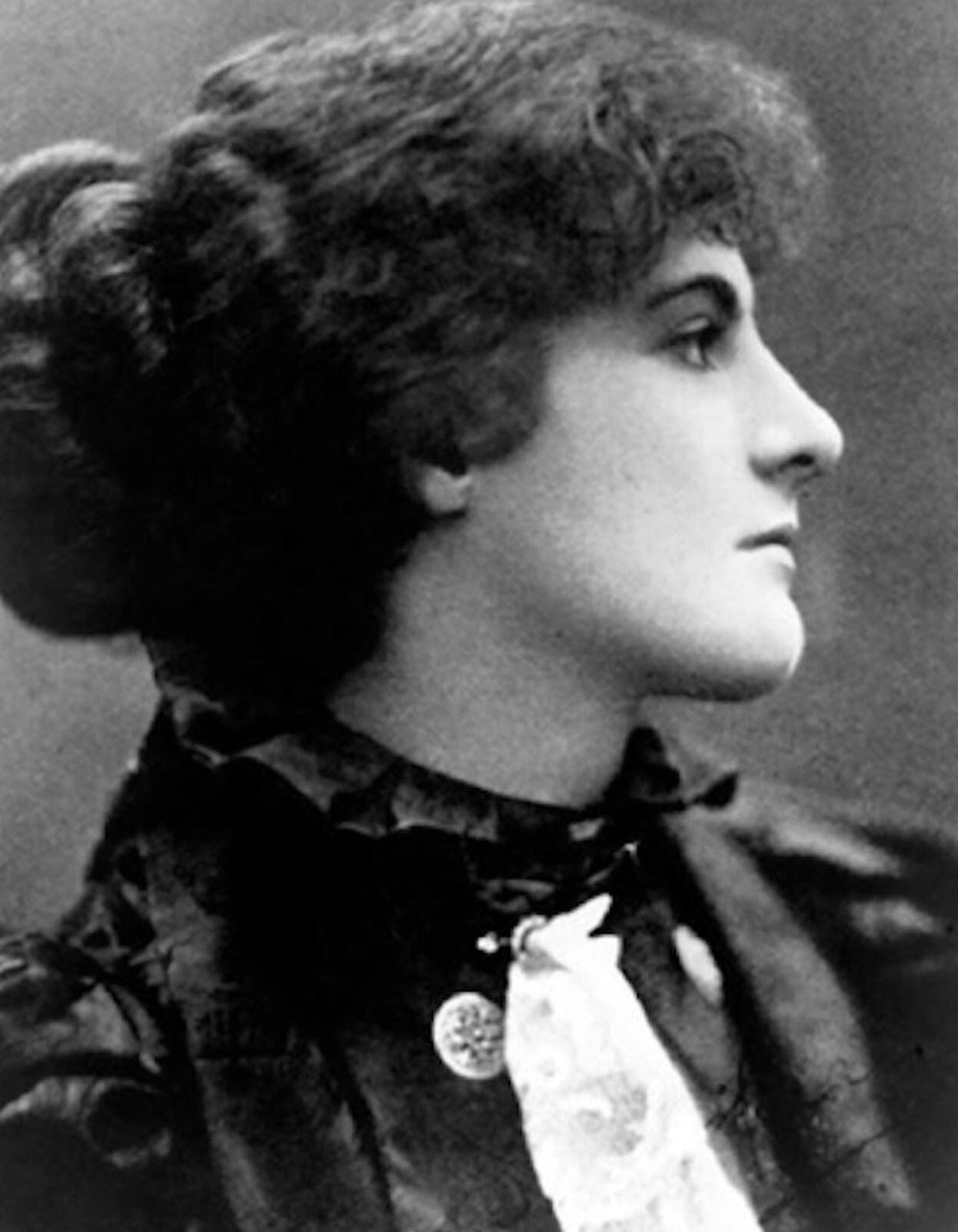
Olivia’s cultural ambitions as an author and hostess cemented the marital divide. ‘She followed intellectual fashion and felt oppressively isolated within her philistine family…..A sad and slightly detached manner hid a sharp brain and a mind of her own,’ concludes Yeats’ biographer Roy Foster.3 The family wasn’t entirely made up of philistines—the poet, essayist, and critic Lionel Johnson was Olivia’s cousin (Yeats edited 21 Poems by Johnson published posthumously). Another cousin was the novelist Harriet Louise Childe-Pemberton whose 1912 novel The Silent Valley features a minor character loosely based on Dorothy. Olivia herself was a novelist—Love on a Mortal Lease (1894), The Journey of High Honour (1894), Beauty’s Hour (1896), The False Laurel (1896), Rupert Armstrong (1899), The Devotees (1904) and Uncle Hilary (1910). Her novels hardly set the world alight but they were published—dominated by the very close-to-home theme of loveless marriage to an older man and the frustrations of intelligent women trying to live on their own terms.
And Olivia’s salons did gather London’s literary figures together.
Among them was Yeats.
Olivia and the Irish poet first met in 1894 and in 1895 their relationship developed. Entering his thirties, it was Yeats’ first sexual relationship and soon he was suggesting (perhaps more in hope than anticipation) that they run away together. When this idea came to nothing Yeats rented rooms at 18 Woburn Buildings near Euston Station in London to be close to Olivia. The relationship ended in early 1897 after the poet’s great love Maud Gonne (1866-1953) visited London. In Memoirs, Yeats recounts the meeting with Olivia which brought the relationship to an end where ‘instead of reading much love poetry, as my way was to bring the right mood round, I wrote letters. My friend found my mood did not answer hers and burst into tears. “There is some one else in your heart,” she said. It was the breaking between us for many years.’ A decade later, Olivia and Yeats were on cordial terms—enough that Olivia was happy to welcome Yeats’ protégé into her home.
The arrival of the colourful American poet in their drawing room had another impact in the Shakespear family. Also charmed was Olivia’s daughter, Dorothy, then aged twenty-two. She writes in her notebook of the impact the poet has had on her: ‘“Ezra”, Listen to it—Ezra! Ezra!—And a third time—Ezra! He has a wonderful, beautiful face, a high forehead, prominent over the eyes; a long, delicate nose, with little, red, nostrils; a strange mouth, never still, & quite elusive; a square chin, slightly cleft in the middle—the whole face pale; the eyes gray-blue; the hair golden-brown, and curling in soft wavy crinkles. Large hands, with long, well-shaped, fingers, and beautiful nails.’ Ten days later she writes: ‘He has attained to peace in this world, it seems to me. To be working for the great art, to be living in, and for, Truth in her Greatness—He has found the Centre—TRUTH.’ Dorothy (pictured below) had read Henry James’ Roderick Hudson, which tells the story of an American artist having his genius tested by his experience of Europe, and quotes the novel in her Notebook in late February 1909. The parallels with Pound are clear.
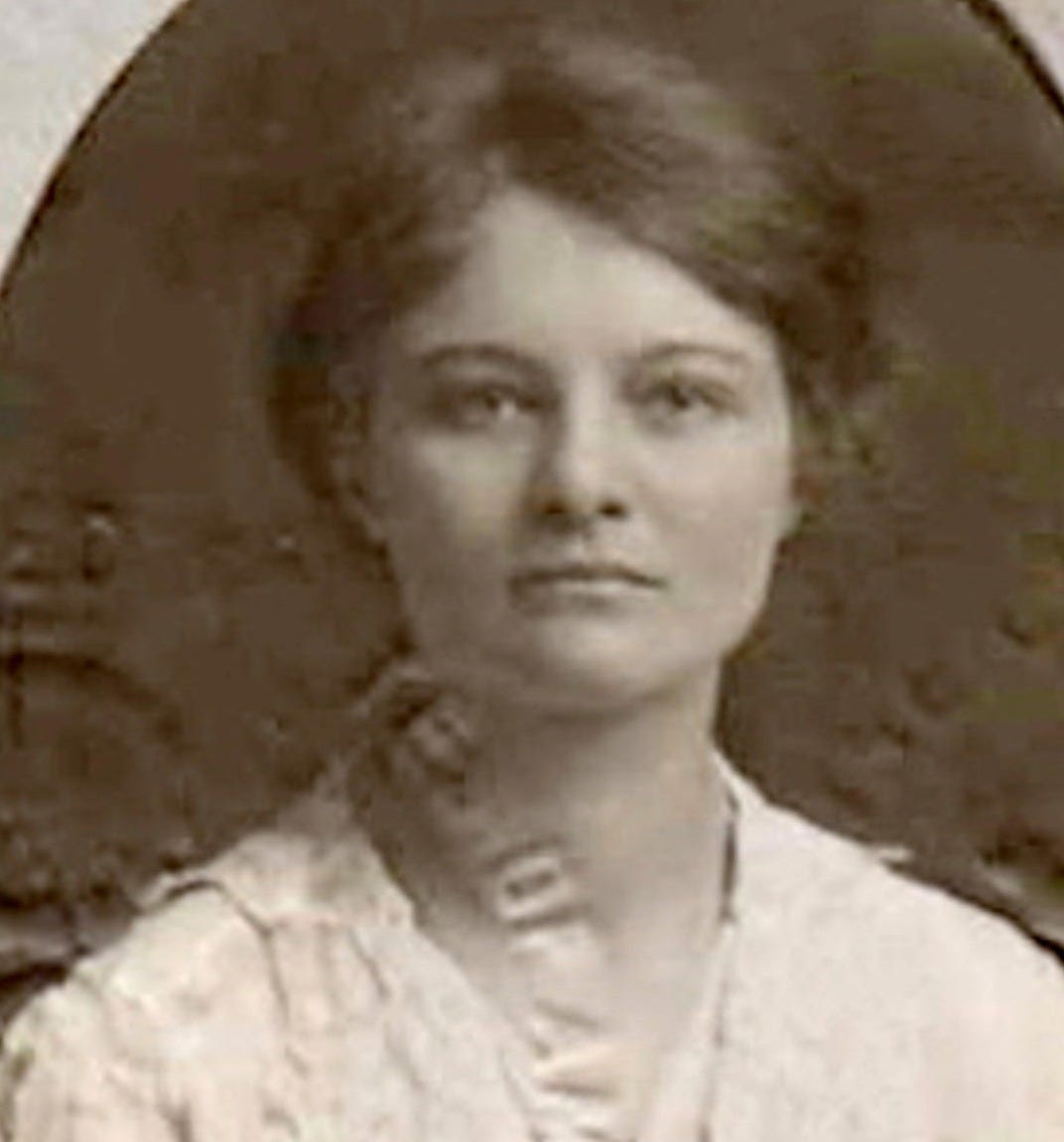
Dorothy’s letters and notebooks during the courtship display a teenage-first-love intensity. There is also a sense that time is fast disappearing to find a suitable mate—‘I must love someone, soon—Life is no good for a girl, without love.’ Dorothy finds the poet to be revelatory company. Being with him is seen as part of her education: ‘You could have taught me all I care about—about poetry & Revelation— Inspiration.’
On the other side, there is a studious and courtly air to Pound’s strangely laboured wooing of Dorothy. Her proximity to the literary circles the ambitious poet wished to ingratiate himself into, and to Yeats in particular, means that their relationship feels like part of the process of literary brand-building rather than a grand passion. It may not have been a marriage of convenience but it was undoubtedly convenient in terms of the poet’s career and literary ambitions. He arrived in London in 1908 and just a few months later had found his way into the literary sanctums of Edwardian London.
The loud American poet did not slot effortlessly into the carefully calibrated confines of the Shakespear family. The problem with the idea of him as a son-in-law was largely financial though Pound’s poetical flourishes and appetite for attention might also have been unappealing to the stolidly middle class Shakespears. Over a lengthy period, the poet tries to persuade his would-be father-in-law that he has the potential to generate an acceptable income to keep Dorothy in the comfortable style she is accustomed to. Various brakes and breaks are put on their relationship. In 1910 Dorothy writes: ‘I take it that during your “exile” you have been forbidden to write to me?’ and later in the same year notes, ‘After all She [Olivia] cannot forbid your coming to London—She can only forbid your coming to the House.’ Olivia chaperones Dorothy on a trip to Sirmione and Venice with Ezra in 1910. It is only in 1911 that the couple are allowed to meet twice a week.
At this point, already two years into their relationship, Dorothy coaches Pound on the best approach to Henry Hope Shakespear: ‘I think you should interview H.H.S.—He is, I believe, much more likely to be perfectly sensible than not; possibly he will ask us to take breath until the New Year? I don’t know. My only advice to you is, that you will, I am sure, find plain businesslike statements much the more efficacious.’ It seems that ‘plain businesslike statements’ might have been beyond the poet because Henry writes to him after their conversation: ‘The subject of our interview yesterday took me quite by surprise.’ Henry requests more details of Pound’s income estimated at some £200 per year. Later that month, with commendable transparency Pound sends his bank account details and a letter from his publishers Macmillan. He then gets his father, Homer, to write to Henry. Again, this fails to provide the financial reassurance required. Henry writes to Homer: ‘We like him personally very much, & consider he has great abilities; but until he has some regular income in addition to a permanently secured £200 a year, it is obvious that he is not in a position to marry.’
The genteel war of attrition continues like a business arrangement edging towards something mutually acceptable. One year on, reporting that his income is now £400, Pound suggests that leaving the country with his new bride could make living off his income possible: ‘This would not go very far in England but Dorothy seems to think she could live abroad for a year or so. This seems feasible and she could see a number of things & places which she probably could not see if I were tied to an educational position.’ This appears a very half-hearted argument for marriage and the poet’s financial security. The signs are far from encouraging that Olivia and Henry will relent. Dorothy writes of her mother to the poet: ‘She evidently thinks we are a somewhat crazy couple—which is just what we aren’t. Perhaps you wish we were.’ Perhaps.
Olivia was nearing the end of her maternal tether. ‘I don’t know if she still considers herself engaged to you—but as she obviously can’t marry you, she must be made to realise that she can’t go on as though you were her accepted lover—it’s hardly decent!’ she writes to Pound. The appeal to decency is perhaps the final English recourse. Olivia adds a neat practical solution: ‘You ought to go away—Englishmen don’t understand yr American ways.’ At this point, in September 1912, Olivia suggests the pair revert to one meeting a week—‘Once a week be hanged,’ is Dorothy’s retort. Olivia also makes clear that she suspects the poet has other romantic entanglements—‘I know that Mme. Hueffer, for one, knows you have an affair with somebody.’ Olivia’s thoughts on the matter appear maternal—‘Dear Ezra—I’m sorry for you—really—but you are a great trouble, & my anxiety about her is always there’—but then they reach a strange conclusion: ‘Tomorrow is her birthday, & all I can feel is that I wish she had never been born. She chose her parents very unwisely.’ There is a remarkable but brutal candour to these sentiments. Wishing Pound away to another continent and Dorothy away from existence is one thing but sharing the sentiments with the poet appears dangerously trusting and candid.
With on-going parental opposition and restrictions on meeting, 1913 was a more troubled year in Dorothy and Pound’s relationship. Dorothy’s excitably-in-love tone slips away as the poet’s insensitivity and wish to dictate provide annoyance. Sniping and domestic drama are never far from the surface. In June, after Pound interferes with the guest-list of a gathering, Dorothy complains: ‘You affect not to care about other people—but you try to interfere a good deal with their doings when they affect yourself.’ Soon after Dorothy announces time on the relationship: ‘I cannot marry you.’ The poet’s reply cryptically repeats ‘you can not’ three times, presumably pointing out the difference between cannot and can not. Cannot suggests the thing is impossible while can not suggests it is a matter of choice. This proves an unlikely route to reconciliation. More tribulations follow. Dorothy is annoyed later that year after Pound strides off down Church Street in Kensington with H.D. and Richard Aldington leaving her behind. ‘You were horrid yesterday,’ she complains. The poet is having none of it: ‘As for Church St. you should holler louder—one can not be expected to preserve all the sensitiveness of the jungle in this age of iron and contraptions.’
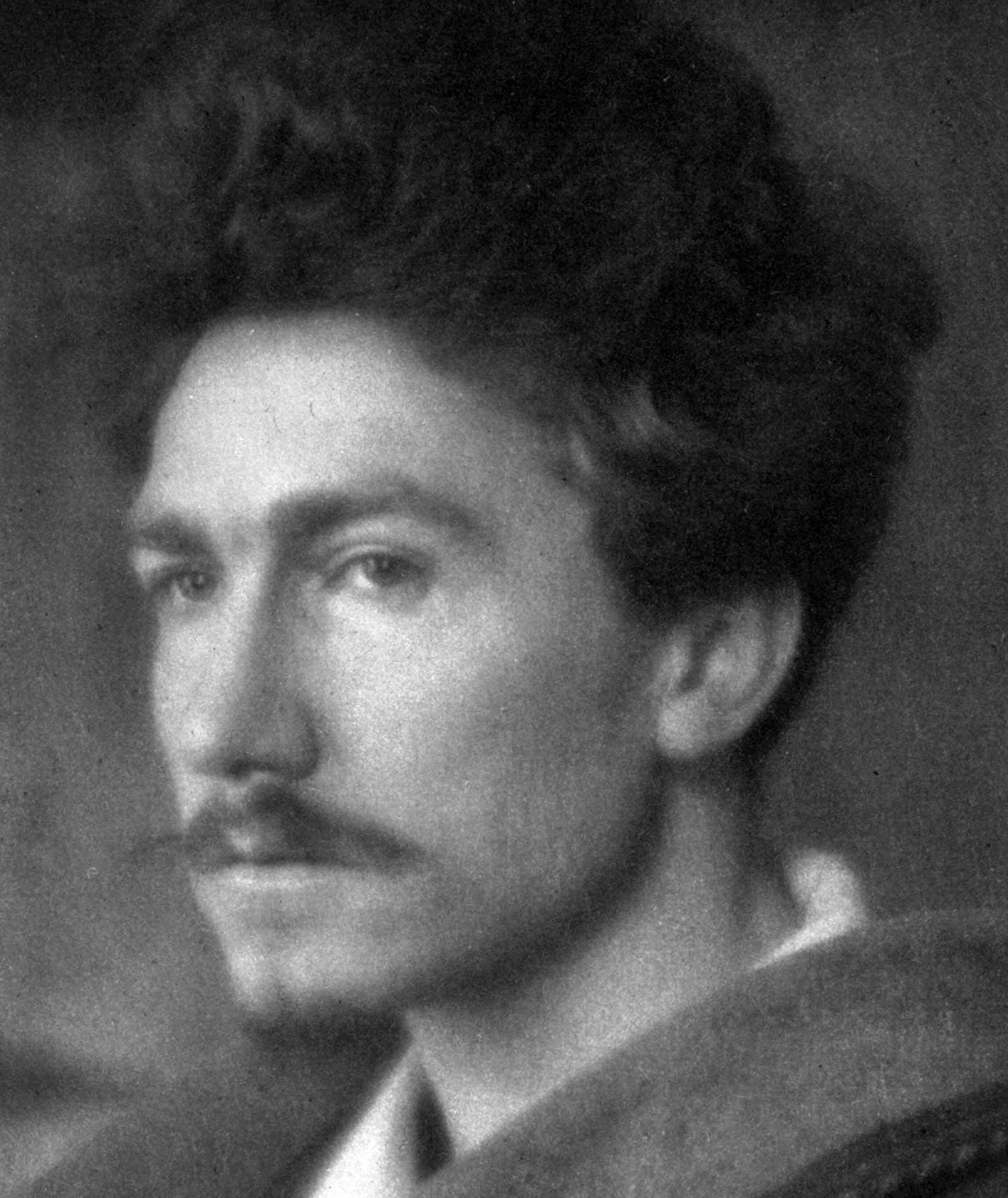
In spite of Pound’s American ways, Olivia Shakespear eventually gives way and instructs or advises her husband to remove his impediment to their daughter’s marriage. There is little excitement in the air after years of persistency and attrition. ‘Consent appears to be given—with some reluctance,’ Dorothy reports. She quickly shares all to her cousin Georgie Hyde-Lees (1892-1968): ‘I told Georgie all about it yesterday afternoon, but she is secret as the grave abt. it until I say she may know. She was pleased, I think. I am sure she was—She didn’t say much—I particularly don’t want her to feel “deserted” by my marrying—I know how it is when one’s girl-friends marry—Of course it can’t be helped in a way —but can you help, if you like her—which I believe you do?’ The good tidings appear to be compromised by continuing parental ‘reluctance’ to heartily embrace the pairing as well as the apparent diffidence of Georgie and slight uncertainty about whether and how much her fiancée likes Georgie.
Adding incestuous layers to this, Yeats eventually married Georgie, immediately truncating her name to George. And, once he himself was married to Dorothy, Pound commenced an affair with Iseult Gonne (1894-1954), the daughter of Maud. Yeats eventually also turned opportunistically to Iseult in the hope of developing a relationship with her after he lost hope of marrying her mother. There is a desperately, and at times indulgently, tortured air to many of Yeats’ relationships. Pound’s, on the other hand, simply appear opportunistic.
Eyes opened and parents persuaded, Ezra and Dorothy eventually married 0n 20 April 1914 in a church (at Mr. Shakespear’s insistence) with ‘half-a-dozen observers’ including Yeats and Georgie.4 Yeats’ wedding present was a cheque which was used to buy a clavichord from the musician Arnold Dolmetsch.
The First World War brought any hopes of moving abroad to a halt. But, once the war was over, Pound’s thoughts—and perhaps those of Dorothy—soon turned to leaving London. By 1920, with an immodesty likely to have riled the literary fraternity, the poet was describing himself as the sole purveyor of originality and energy in the English literary world: ‘What it comes down to is that I have “run” what intellectual life there is here, for the past six years, and now that les maitres, les vieux, are gone I don’t see the point in ramming art against the dead mentality of England.’5 There is a feeling of bridges being deliberately ignited.
The feeling was evidently mutual. The poet and former literary ally F. S. Flint provided a farewell barb—‘You have not been a good comrade, voilà.’6 It was not an isolated attack. In 1917 Flint writes to the activist, editor and patron Harriet Shaw Weaver: ‘The truth is we are all tired of Mr. Pound. His work has deteriorated from book to book; his manners have become more and more offensive and we wish he would go back to America.’7 After memorably describing Pound as a ‘sinister Charlie Chaplin’, Flint concludes: ‘Those of us who were once associated with him are no longer, for very good reasons, [and] detest him with the healthiest of loathings.’ Towards the end of Pound’s stay in London, even his friend T. S. Eliot writes: ‘He is becoming forgotten. I am worried as to what is to become of him.’8 Pound was tired of London and the feeling was mutual. He rarely had a positive word to say about the city for the rest of his life. In 1920, he and Dorothy left to follow the literary crowd to Paris.
Unless otherwise referenced, all quotes from letters and notebooks are from Ezra Pound and Dorothy Shakespear: Their Letters 1909-1914, Omar Pound and A. Walton Litz (eds.) (London: Faber and Faber, 1985).
R. F. Foster, W. B. Yeats A Life: The Apprentice Mage (Oxford: Oxford University Press, 1997), p. 153.
R. F. Foster, W. B. Yeats A Life: The Apprentice Mage (Oxford: Oxford University Press, 1997), pp. 152-3.
J. J. Wilhelm, Ezra Pound in London and Paris 1908-1925 (Philadelphia: Penn State University Press, 1990), p. 154.
Timothy Materer (ed.), Selected Letters of Ezra Pound to John Quinn (Durham N.C.: Duke University Press, 1991), p. 193.
F. S. Flint to Ezra Pound 3 July 1915, Christopher Middleton, ‘Documents on Imagism from the papers of F. S. Flint’, The Review, No. 15, April 1965, p. 42.
F. S. Flint to Harriet Shaw Weaver 21 February 1917, University of Texas Library, F. S. Flint Collection MS-1423.
T. S. Eliot to John Quinn 25 January 1920, Valerie Eliot and Hugh Haughton (eds.), The Letters of T. S. Eliot 1898-1922 (London: Faber and Faber, 2009), p. 435.